How to Create a New Part in SPARROW: From ERP Friction to Clean, Reusable Data
Creating a new spare part should be a straightforward task. In reality, it is one of the most common sources of data quality issues in ERP systems.
Across organisations, the same pattern repeats itself: maintenance teams cannot find an existing part, assume it does not exist, and create a new one. Over time, this leads to duplicates, inconsistent descriptions, incomplete attributes, and growing mistrust in the material master.
SPARROW was built to address exactly this problem, by treating new part creation as part of a broader spare parts data lifecycle, not a one-off transaction.
Why new part creation fails in ERP systems
ERP systems are designed for most enterprise needs, but not spare parts management. And new part creation is often the first point where this becomes visible.
The initial failure point is duplicate creation. ERP search relies on rigid, field-based logic: users must know exactly where information is stored and how it was entered. If the manufacturer appears in a different description field, is abbreviated differently, misspelt, or translated inconsistently, the part is effectively invisible. When teams cannot find an existing part, they recreate it, not out of carelessness, but because the system does not support how people actually search.
Beyond duplicates, there are structural issues. ERP material master data models are generic by design and do not reflect the specific attributes that matter for spare parts. As a result, users are often required to enter large amounts of data, much of it irrelevant for identification or reuse, while critical information for MRO context is missing, optional, or inconsistently maintained.
Under time pressure, and without deep technical or data-model knowledge, users do what the system allows them to do: enter what they can, skip what they cannot, and move on. Over time, this leads not only to duplicates, but to incomplete, inconsistent, and unreliable spare parts data, setting the stage for long-term data degradation.
Creating the right part, not just a new one
New part creation in SPARROW starts by removing the root causes of duplication.
SPARROW builds on the clean, harmonised material master created through SPARROW.Clean. Intelligent search and matching operate across structured, high-quality data, rather than raw free text. Users do not need to know which field contains which attribute, nor do they need to match text exactly.
Before a new part is created, SPARROW checks whether it already exists, either within the company’s own catalogue or via matching against trusted external catalogues of a total of 44 million parts.
If two users describe the same Siemens component differently, SPARROW can still identify it as the same part.
This ensures that only genuinely new parts enter the system, while existing ones are reused consistently across plants.
Standardised data from the start
When a new part is required, SPARROW ensures it is created with structure and consistency.
Relevant attributes are captured and completed in a standardised way.
Descriptions are generated automatically based on the entered data and translated into multiple languages to support global organisations.
Rather than introducing new variability at the point of creation, SPARROW reinforces the data standards established by SPARROW.Clean, ensuring the material master remains coherent over time.
Create a new part even when information is incomplete
In reality, spare parts are often created under pressure. Information may be scattered, incomplete, or only available on a label in the warehouse. The person creating the part may not be a data expert, and they usually need the part in the system quickly to keep operations moving.
SPARROW is designed around this reality. Instead of assuming perfect information or technical expertise, it supports multiple ways to create a new part, depending on what is available at the time.
- Manual entry when details are known
When specifications are clear, users can enter part information directly, supported by validation and matching to avoid duplicates. - Excel (XLS) uploads
When parts need to be created in bulk or data already exists in spreadsheets, Excel files can be uploaded and processed without manual re-entry. - PDF uploads from suppliers or legacy documentation
Technical PDFs and supplier documents can be uploaded, with key attributes extracted and mapped into structured part records.
Whatever the starting point, SPARROW applies the same intelligent matching, description generation, and validation logic, ensuring that even fast, imperfect inputs result in clean, reusable part data.
From global material to plant usage
A material master is always global. To be operationally usable in an ERP system, it must be extended to specific plants.
SPARROW supports plant extension through a clear, user-friendly interface. Users can define how a part should be handled operationally and assign it to one or multiple plants without navigating complex ERP screens.
This step is a prerequisite for ERP integration but the real value lies upstream, in ensuring the part itself is correct, unique, and reusable.
From clean creation to sustained quality
Creating a part correctly once is essential. Keeping it relevant and usable over time is just as important.
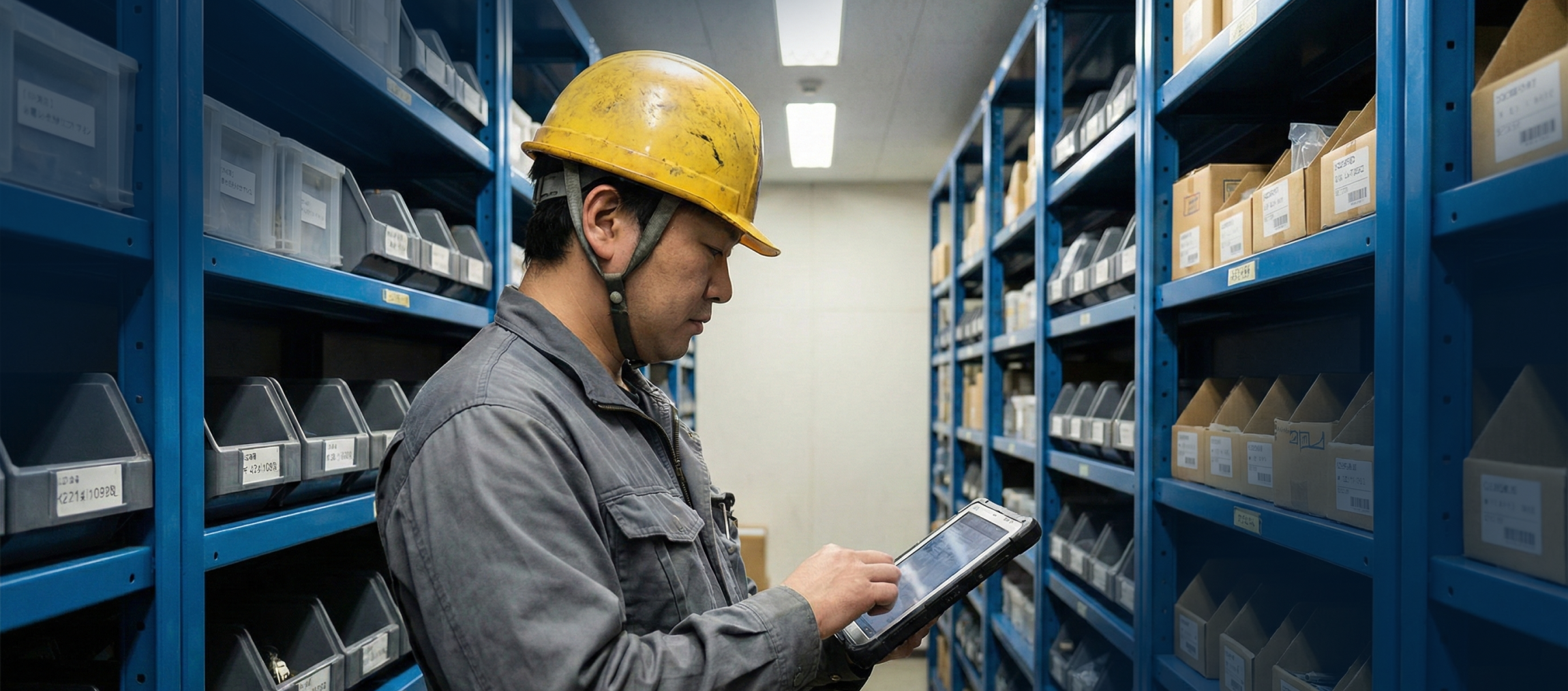
Once a part is live, SPARROW.Stock ensures that spare parts catalogues and inventory data remain accurate as conditions change. Designed to be mobile-friendly and usable directly on the shop floor, it enables operational teams to validate, update, and maintain spare parts data as part of their daily routines. This reduces the gap between how data is used in reality and how it is maintained in systems, preventing gradual drift in descriptions, attributes, and stock information over the long run.
Building on this, SPARROW.Plan uses the same clean, reliable data to support consistent criticality assessment, stocking strategies, and planning decisions. Because parts are created and maintained in a standardised way, they can be evaluated, stocked, or phased out with confidence, without reopening fundamental data quality questions.
Together, SPARROW.Clean, new part creation, SPARROW.Stock, and SPARROW.Plan form a continuous lifecycle:
clean data → controlled creation → data-driven planning → sustained quality
This ensures that spare parts data does not just stay clean, but remains operationally relevant and decision-ready over time.
The result is fewer duplicates, higher trust in the material master, and spare parts data that actively supports maintenance, planning, and procurement rather than undermining them.
Can you trust the data your teams use every day?
How confident are you that the spare parts data used on the shop floor today still reflects what is actually in your systems?
For many organisations, the answer depends less on strategy and more on whether data can be maintained where it is used: by the people who rely on it every day.
This is where SPARROW’s lifecycle approach to spare parts data comes into play.
If you want to see how this works in practice, book a demo to explore how SPARROW supports clean creation, shop-floor usability, and data-driven planning across the full spare parts lifecycle.
Curious to know what your spare parts data quality is like?
We are happy to run a quick scan of your own data to evaluate your own duplicates and obsolescence rates. During a review of your assessment, we will also provide you with a calculation of the financial impact better data quality could have in your company.