
We scan your spare parts data. You get answers.
Register for a MRO Value Scan of your own data and get clear insights into your spare parts data quality, costs, and optimisation levers.

Trusted by




Turn spare parts into a performance lever
Less Overstock and Waste
Reduce your spare parts stock by eliminating duplicate parts, better planning and pooling.
Higher Availability, Less Downtimes
Leverage better planning to reduce risk of stock-outs. Tap a large pool of spare parts in emergencies.

Eliminate Manual Effort
Cut spare parts management overhead: maintain data quality, plan, search, and procure with ease.
Complete visibility over spare parts
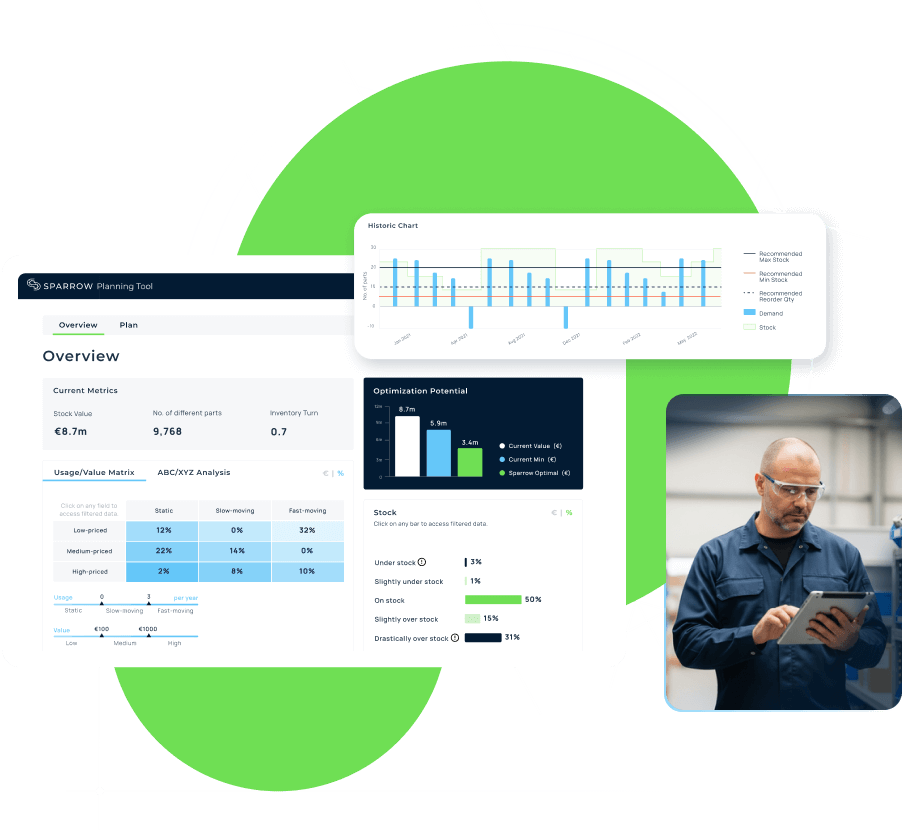
All the metrics and information you need to make informed decisions about your spare parts in one powerful dashboard.

One Hub. Complete Spare Parts Lifecycle Control.
- Manage the full lifecycle of your spare parts: from sourcing to standardisation, inventory, and storage
- Centralise data to make faster, smarter decisions
- Improve efficiency across sites, teams, and suppliers
- Roll out modularly — start where the impact is greatest and scale across functions and sites over time
.png)

AI-powered data cleaning solution
- Reduce duplicates in your spare parts stock
- Identify obsolete parts
- Improve procurement processes
- Reduce search time for maintenance teams


Custom spare parts planning and optimisation
- Reduce overstock using dynamic planning
- Improve uptime with accurate demand forecasting
- Keep up-to-date with supply chain intelligence
- View key spare parts metrics at a glance

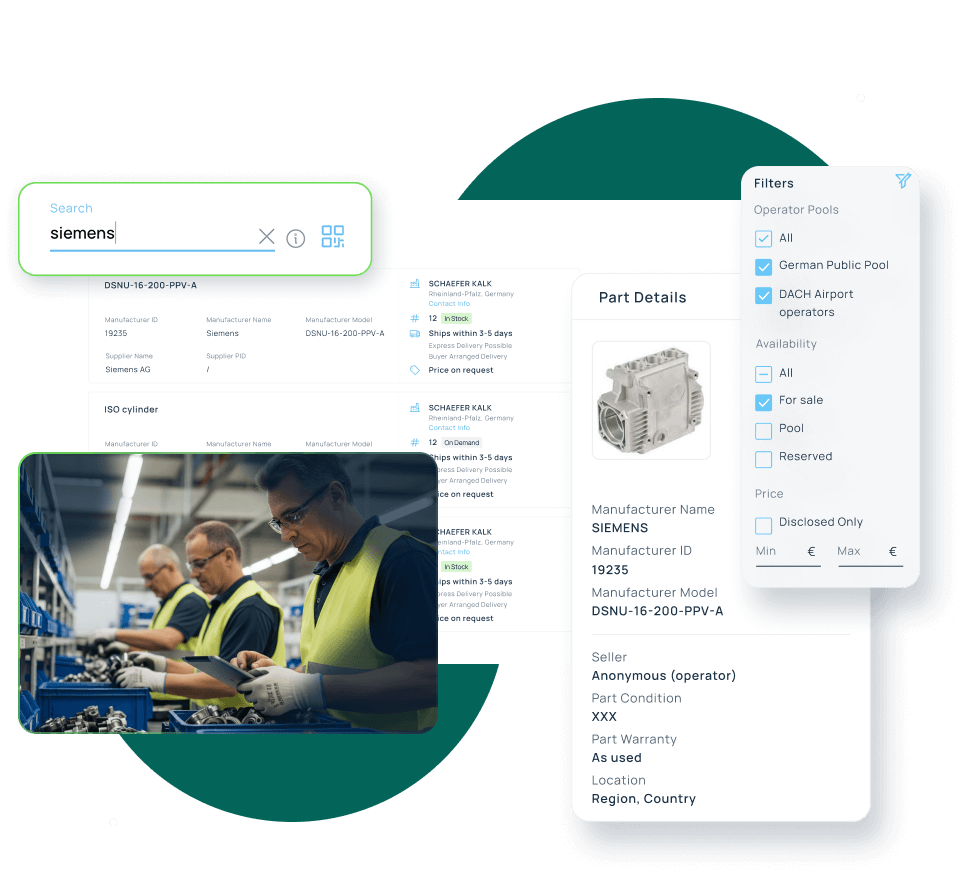
Network of operators and suppliers for critical spares
- Create an internal pool for sharing parts
- Tap an unlimited pool of spare parts in emergencies
- Find more suppliers for your parts
- Sell overstocked spare parts

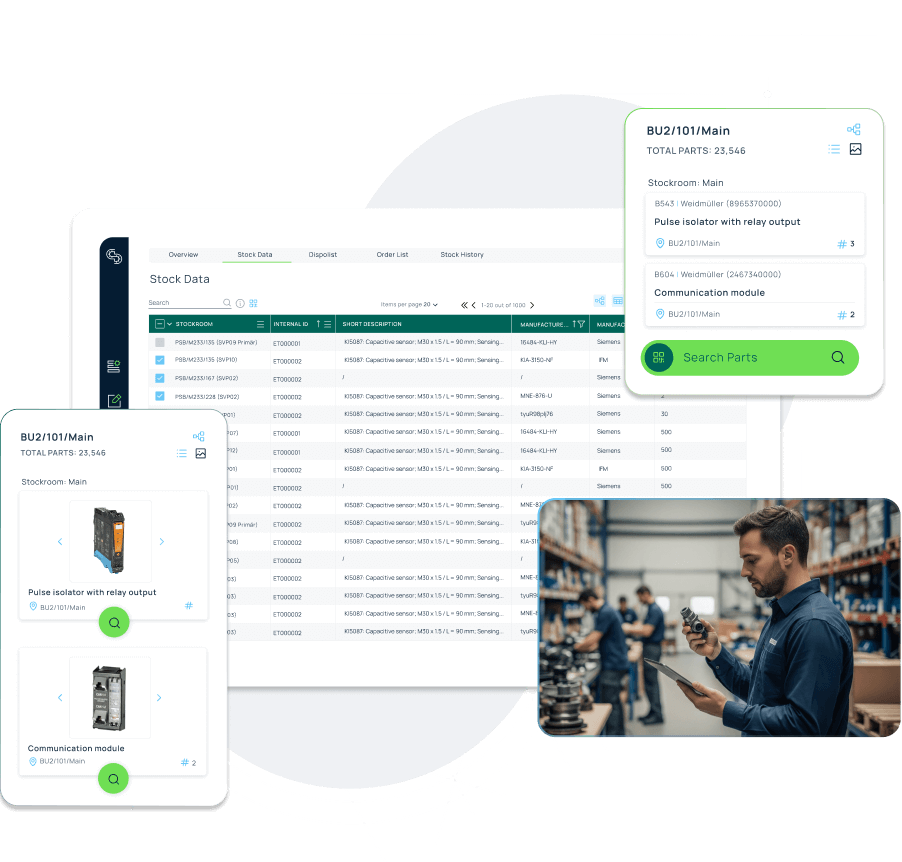
Simple-to-use spare parts inventory manager
- Locate spare parts with a user-friendly interface
- Standardise stock data and streamline item management
- Gain real-time visibility into inventory levels and locations
- Reduce time spent searching, sorting, and replenishing parts







The MRO Value Scan is a fast, low-effort way to assess the current state and potential of your spare parts data. Based on the dataset you provide, SPARROW analyses your catalogue to identify duplicate and obsolete parts, highlight data quality issues, and define a relevant project scope.
You also receive an initial estimate of your optimisation and savings potential, giving you a clear view of the business impact. As part of the process, you get access to the platform to review the results and download the analysed data in Excel format for internal use.
The process is simple and structured:
- Initial consultation – A short call with one of our experts to understand your challenges, current setup, and objectives.
- Scope & data alignment – We define which data is needed to assess your optimisation potential.
- NDA signature – We ensure full confidentiality before any data exchange.
- Data analysis – You share your data, and SPARROW runs the analysis.
- Results review – We walk you through the findings, including identified inefficiencies and quantified savings opportunities.
- Platform trial (optional) – Depending on your company size and the scope of the project, you may be given access to SPARROW.Clean and SPARROW.Stock, where you can explore the results and work directly with your own data.
The required data depends on your ERP system and current setup.
Typically, this includes your spare parts master data and, where available, stock and usage information. After the initial consultation, we provide a clear and simple data guide tailored to your system to make the process as easy as possible.
Yes — SPARROW is fully GDPR-compliant and meets enterprise-grade security standards. Your data is stored securely in Frankfurt / Germany, with options for cloud hosting or hybrid deployment. We follow best practices in encryption, access control, and data handling to ensure your information stays protected and under your control. Our team also supports IT and security reviews during onboarding, so you can be confident all compliance requirements are met before your teams start using the platform.